💔 别再“冷战”了!它比你想象中更致命。
吵架后,你是否也用沉默(Silent Treatment)来惩罚伴侣?《纽约时报》深度剖析这种看似温和,实则“极具杀伤力”(really lethal)的行为。心理学研究表明,冷战会激活大脑中的“疼痛区域”!(需要获取免费外刊资源和更好看的外刊笔记,可以关注公众号“英语小秋秋”)。
本期外刊精读,理清(unravel)冷战的危害,整理出高频词汇、地道动词(如:fuming, squirm, crack the ice)和专业句式。终结“吵闹式沉默”,学会用“暂停”(timeout)来修复关系。
Table of Contents
对比翻译
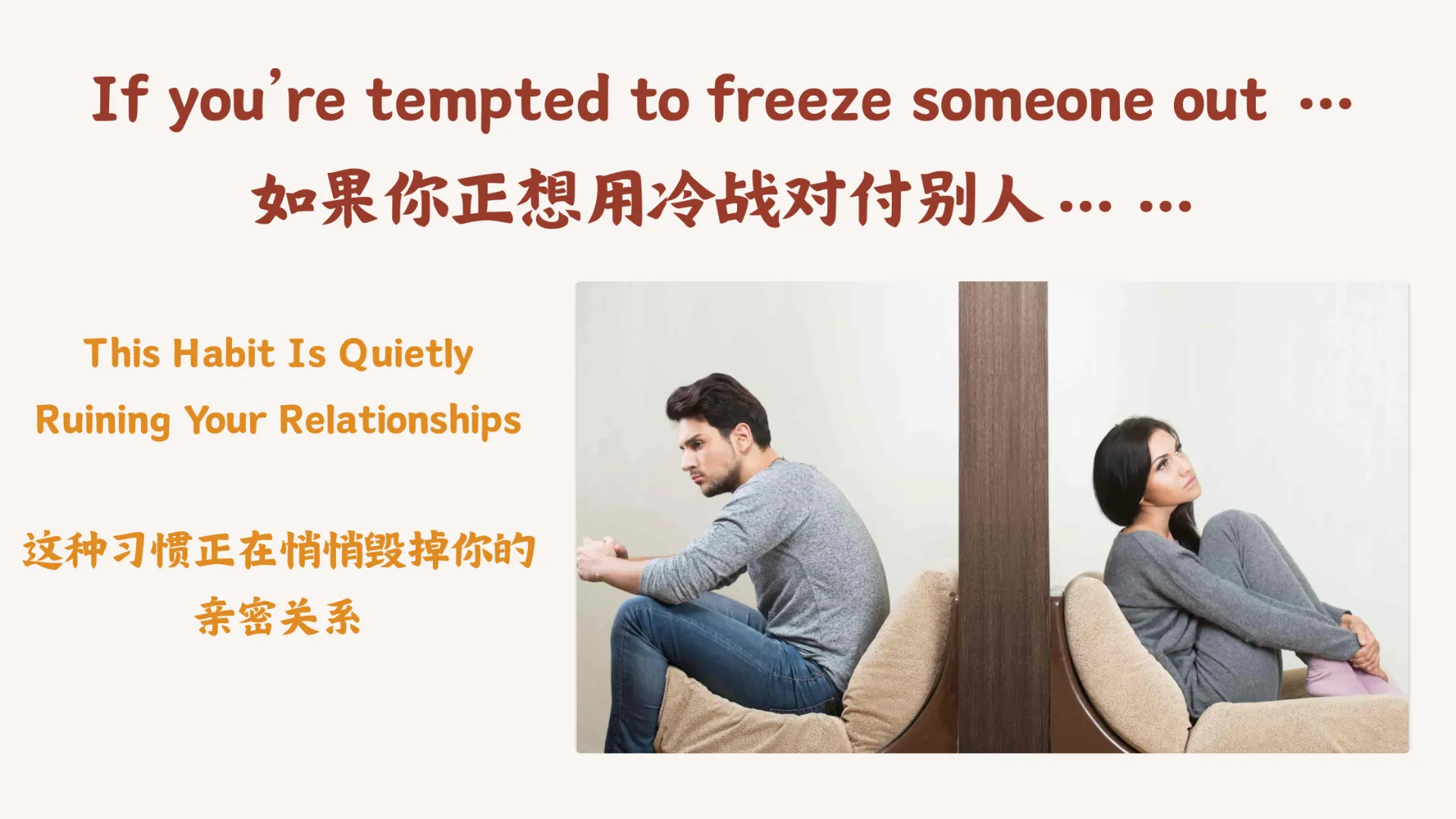
This Habit Is Quietly Ruining Your Relationships
这种习惯正在悄悄毁掉你的亲密关系
Many of us have done it, but that doesn’t make it right, experts say.
很多人都做过这件事,但专家表示,这并不代表它是对的。
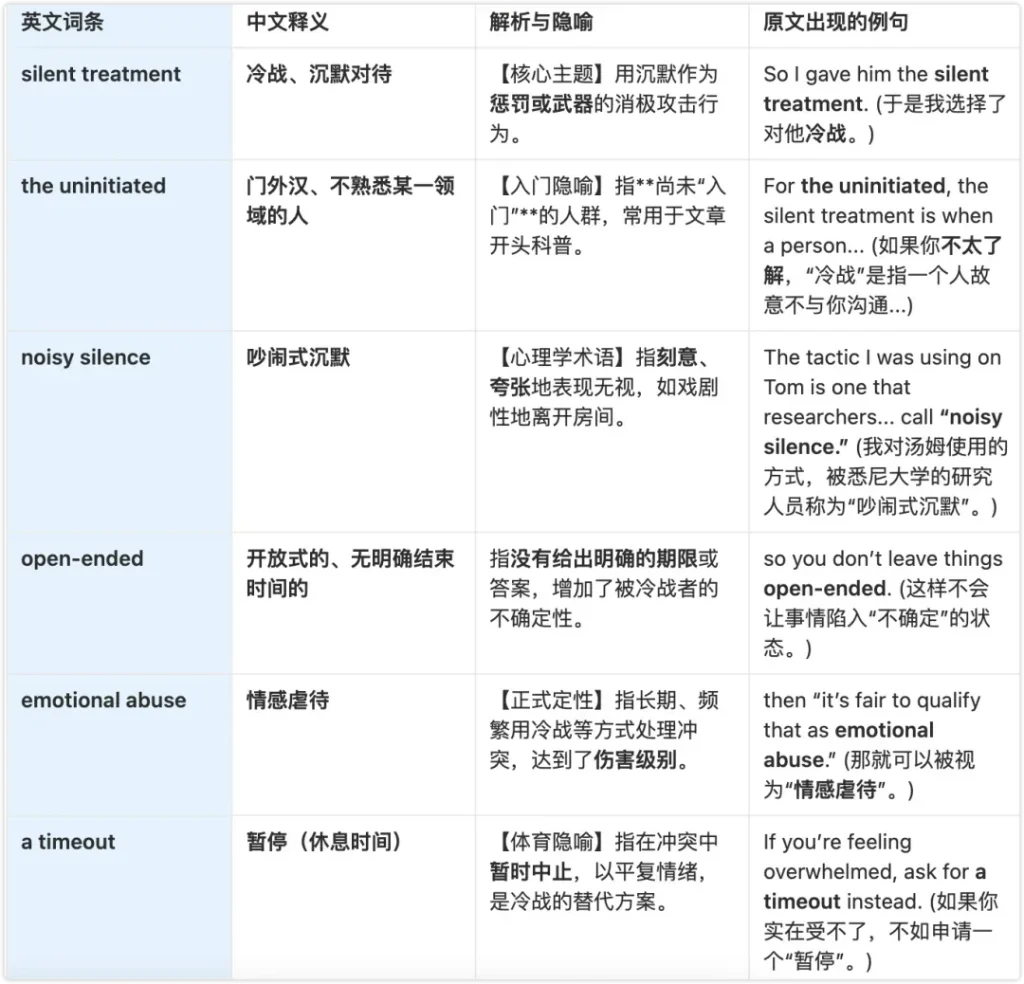
One night last week, my husband, Tom, and I got into an argument. The next morning, I was still fuming. So I gave him the silent treatment.
上周某天晚上,我和我丈夫汤姆吵了一架。第二天早上我还在生气,于是我选择了对他冷战。
For the uninitiated, the silent treatment is when a person intentionally refuses to communicate with you — or in some cases, even acknowledge you.
如果你不太了解,“冷战”是指一个人故意不与你沟通——有时甚至完全无视你的存在。
It’s a common maneuver that’s used in all sorts of relationships, said Kipling Williams, emeritus professor of psychological sciences at Purdue University who has studied the effects of the silent treatment for over 30 years.
普渡大学心理科学荣誉教授基普林·威廉姆斯研究“冷战”三十多年,他说这是在各种关系中都常见的一种手段。
The tactic I was using on Tom is one that researchers from the University of Sydney call “noisy silence.”
我对汤姆使用的方式,被悉尼大学的研究人员称为“吵闹式沉默”。
That is when a person tries, in an obvious way, to show the target that he or she is being ignored — such as theatrically leaving the room when the other person enters.
也就是一个人用非常明显的方式表达“我在无视你”——比如对方一进来,你就故意做出夸张反应、立刻离开房间。
I’m ashamed to say that this was me. When I wordlessly left for work, I glared at Tom and then dramatically slammed the door.
很羞愧地说,我就是这样。当我一言不发地去上班时,我狠狠瞪了汤姆一眼,然后用力甩上门。
Using the silent treatment is tempting because it can feel good, temporarily, to make the other person squirm, said Erin Engle, a psychologist with NewYork-Presbyterian/Columbia University Irving Medical Center.
哥伦比亚大学附属医院的心理学家艾琳·恩格尔说,冷战之所以诱人,是因为短期内让对方坐立难安会让人感到“出了一口气”。
But, she added, it can have long-term consequences in your relationship.
但她补充说,长期来看,这会伤害你们的关系。
I asked experts what to do it if you’re getting the silent treatment — or if you’re feeling the urge to give it to someone else.
我请教了专家:如果你正在遭受冷战,或你想冷战别人,应该怎么办?
If you’re tempted to freeze someone out …
如果你正想用冷战对付别人……
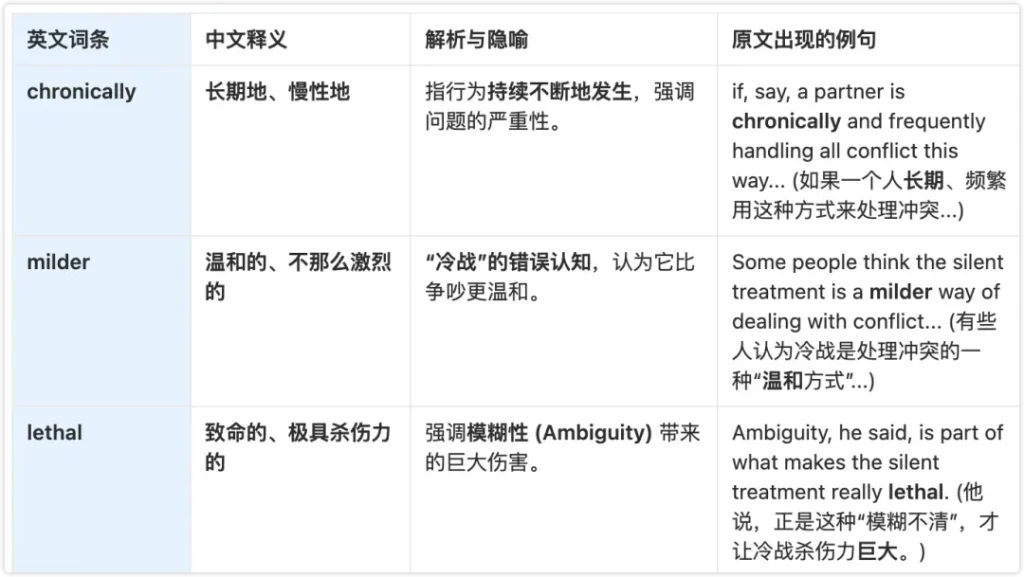
Some people think the silent treatment is a milder way of dealing with conflict, said Dr. Gail Saltz, clinical associate professor of psychiatry at the NewYork-Presbyterian Hospital.
盖尔·索尔茨博士表示,有些人认为冷战是处理冲突的一种“温和方式”。
But it isn’t, she explained. “The silent treatment is a punishment,” she said, “whether you are acknowledging that to yourself or not.”
但她解释说,事实并非如此。“冷战是一种惩罚,”她说,“不管你是否意识到。”
For the person who is being frozen out, it creates “anxiety and fear, and feelings of abandonment,” Dr. Saltz said, and it often causes a “cascade of self-doubt, self-blame and self-criticism.”
被冷战的人会感受到“焦虑、恐惧和被抛弃的感觉”,索尔茨博士说,而且这还会引发一连串“自我怀疑、自责和自我批评”。
And it hurts, Dr. Williams added.
威廉姆斯博士补充说,这真的很伤人。
His research suggested that being excluded and ignored activates the same pain regions in the brain as physical pain.
他的研究表明,被忽视和排斥,会激活大脑中与身体疼痛相同的区域。
“So it’s not just metaphorically painful, it is detected as pain by the brain,” he said.
“所以这不仅是比喻上的痛,在大脑里它就是疼痛,”他说。
If you’re feeling overwhelmed, ask for a timeout instead, Dr. Williams advised.
如果你实在受不了,威廉姆斯博士建议,不如申请一个“暂停”。
You can say: “I can’t talk to you right now, I’m so upset. I’m going to go for a walk and I’ll come back in an hour.”
你可以说:“我现在太生气了,没法跟你说话。我要去走走,一小时后回来。”
Give a clear time when you will be back and willing to talk, so you don’t leave things open-ended, said James Wirth, an associate professor of psychology at Ohio State University at Newark who studies ostracism.
詹姆斯·沃斯是俄亥俄州立大学纽瓦克分校的心理学副教授,他研究“排斥行为”。他说,你要明确告诉对方自己什么时候回来、什么时候愿意谈,这样不会让事情陷入“不确定”的状态。
Ambiguity, he said, is part of what makes the silent treatment “really lethal.”
他说,正是这种“模糊不清”,才让冷战杀伤力巨大。
And remember: While using the silent treatment may give you a sense of power and control, Dr. Williams said, it’s also draining.
别忘了:虽然冷战可能让你暂时觉得自己掌控了局面,威廉姆斯博士说,它其实也非常耗人心力。
It takes work to enforce “this behavior that’s unusual and contrary to norms,” he explained, “so it takes a lot of cognitive effort and a lot of emotional effort.”
他说:“维持一种反常、违背社交规则的行为,其实需要花费大量精力和情绪成本。”
If you’re on the receiving end …
如果你是那个被冷战的人……
There isn’t much literature on the most effective way to break the silence, Dr. Wirth said.
沃斯博士表示,目前并没有太多研究告诉我们该怎么有效打破沉默。
The only true suggestion based on the research, he said, is that it should be stopped.
但有研究共识的一点是:这种冷战必须停止。
If you’re up for it, he said, write a note or appeal to the person directly rather than prolonging the silence.
如果你愿意,可以写一张便条,或是主动去找对方沟通,而不是继续沉默下去。
To reestablish connection, try to summon your empathy, Dr. Saltz said.
索尔茨博士建议:要想恢复联系,你得调动起同理心。
Though she acknowledged that could be hard. “You think, ‘Why can’t they just talk to me?’ Like, ‘This is terrible, no sweat for them,’” she said.
她承认这确实很难:“你可能会想,‘他们怎么就不能跟我说句话?’或者,‘他们一点也不难受吧?’”
But that’s not necessarily true, she added. The person may have worked themselves into a state of distress, she said.
但事实未必如此。对方很可能也陷入了焦虑和压力之中。
“It actually isn’t easy for them,” she said. “It is hard for them.”
“其实对他们来说也很难受,”她说,“这并不轻松。”
Dr. Saltz suggested approaching the person with openness and curiosity by using the following script:
索尔茨博士建议你可以用一种开放而好奇的方式和对方沟通,比如说:
“It makes me feel that we can’t move forward when you’re giving me the silent treatment. I want to understand what’s happening with you. I don’t want you to feel upset. I want to make things better between us. And I need more information about what is happening with you in order to do that.”
“你对我冷战让我觉得我们没法继续前进。我想了解你到底怎么了。我不希望你难过。我希望我们之间的情况能好起来。为此,我需要你告诉我,到底发生了什么。”
And while many of us are guilty of using the silent treatment once in a while, Dr. Saltz added, if, say, a partner is chronically and frequently handling all conflict this way, then “it’s fair to qualify that as emotional abuse.”
虽然我们很多人偶尔都会用冷战,但索尔茨博士指出:如果一个人长期、频繁用这种方式来处理冲突,那就可以被视为“情感虐待”。
In a calm moment, ask your partner to brainstorm other ways of solving conflict, Dr. Saltz said.
她建议,在平静的时候,可以和伴侣一起想一想还有哪些方式可以处理冲突。
If that doesn’t work, Dr. Engle said, you might suggest the two of you go to therapy, so you can both learn more effective ways of handling disagreements or being emotionally overwhelmed.
如果沟通无效,恩格尔博士建议你们可以一起去做心理咨询,学习更有效的情绪处理和冲突解决方式。
If your partner is unwilling to try therapy, Dr. Saltz said, then go yourself,
索尔茨博士说,如果对方不愿意,那你也可以自己去做咨询。
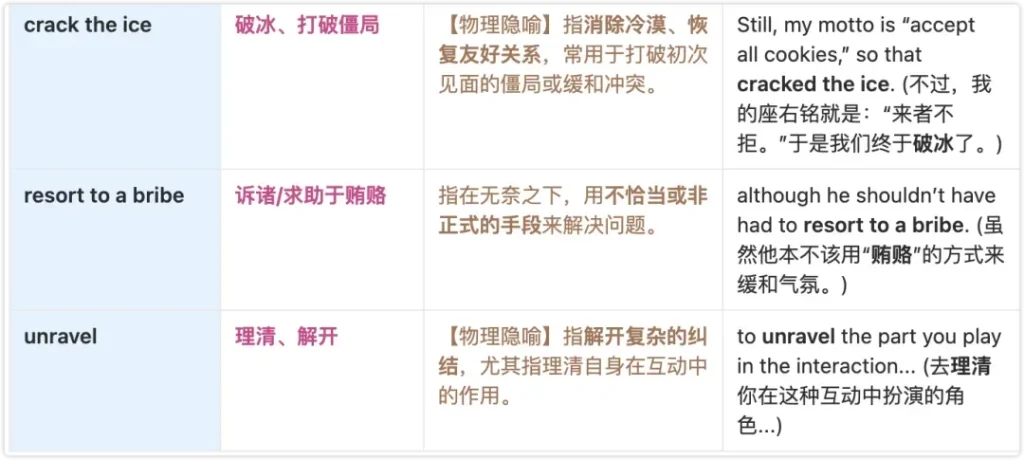
“to unravel the part you play in the interaction and get guidance on how to manage the silent treatment when it’s happening to you.”
“去理清你在这种互动中扮演的角色,并得到专业建议,帮助你在面对冷战时找到应对方法。”
My “noisy silence” with Tom lasted only a few hours, but next time, I’ll talk it out instead of shutting him out.
我对汤姆的那场“吵闹的沉默”只持续了几个小时。下一次,我不会再选择把他关在情绪门外,而是会好好沟通。
When I came home from work, he offered me a bag of cookies from a bakery I like, although he shouldn’t have had to resort to a bribe.
我下班回家时,他给了我一袋我最爱那家面包店的饼干,虽然他本不该用“贿赂”的方式来缓和气氛。
Still, my motto is “accept all cookies,” so that cracked the ice.
不过,我的座右铭就是:“来者不拒——尤其是饼干。”于是我们终于破冰了。 🍪
全文对照词条卡片
I. 动词与动词短语(动作和行为)
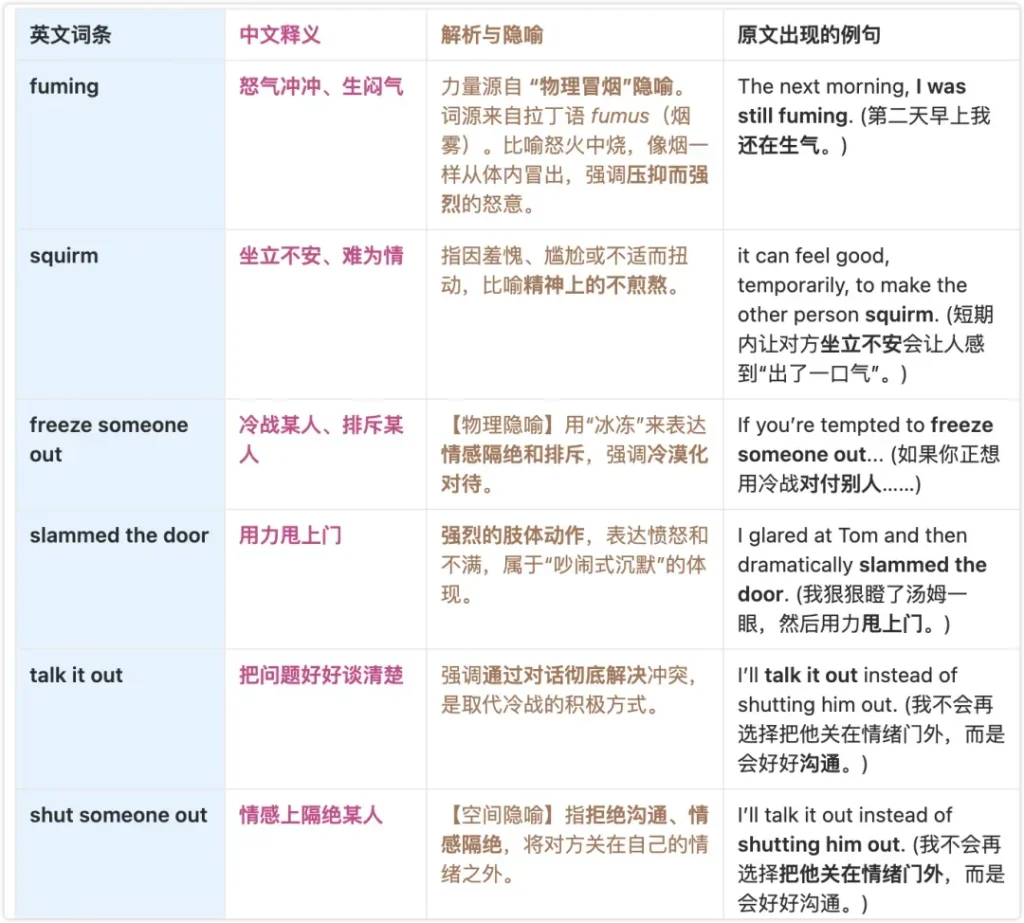
II. 名词与名词短语(概念和状态)

III. 形容词与副词(修饰和程度)
先学表达再活用
1. “fuming” 怒气冲冲、非常生气
One night last week, my husband, Tom, and I got into an argument. The next morning, I was still fuming. So I gave him the silent treatment.
上周某天晚上,我和我丈夫汤姆吵了一架。第二天早上我还在生气,于是我选择了对他冷战。
结合韦氏词典的讲解,我汇总一下:
词义解释:作动词时,表示“怒气冲冲、生闷气”,强调气得直冒烟、压抑而强烈的怒意。
词源记忆:来自拉丁语 fumus,意为“烟”,原意是“冒烟”,后来引申为“怒火中烧”。
想象一下,人生气的时候像烟一样从鼻子冒出来,画面感十足!
权威词典例句(牛津):
▸She sat in the car, silently fuming at the traffic jam.
她坐在汽车里,心中对交通堵塞感到十分恼火。
写作迁移表达:
▸ I was still fuming over what he said last night.
我还在为他昨晚说的话生气。
▸ Instead of calming down, she just kept fuming all morning.
她一整个早上都在憋气。
✅ 替代表达:
- be boiling inside(内心沸腾)
Anger was boiling up inside me.
怒火在我胸中燃烧。 - seethe with anger(怒火中烧)
Her whole being seethed with shame and anger and humiliation.
她的整个人都充满了羞愧、愤怒和屈辱。 - stew over something(对某事耿耿于怀)
2. 冷战 silent treatment 🙊
词义解释:指“冷战”,即故意不说话、不回应、不理睬对方,用沉默表达愤怒或惩罚的方式。
常见于亲密关系、家庭或职场中,是一种消极攻击手段。
表达画面感:像是用沉默筑起一堵墙,让对方感到被拒之门外。相比直接爆发,更“安静”但更伤人。
美剧例句(小谢尔顿):
▸ I thought she was giving me the silent treatment.我还以为她是在闹脾气故意不回我呢。
✅ 写作迁移表达:
▸ Giving someone the silent treatment may feel powerful, but it damages communication.冷战看似让人掌控局面,实则破坏了沟通。
✅ 相关短语补充:
- give someone the cold shoulder(对某人冷淡以对)
- freeze someone out(把某人冷在一边)
- shut someone out emotionally(把某人情绪上隔绝)
3. 英语怎么说“门外汉”
For the uninitiated, the silent treatment is when a person intentionally refuses to communicate with you — or in some cases, even acknowledge you.
如果你不太了解,“冷战”是指一个人故意不与你沟通——有时甚至完全无视你的存在。
看到the uninitiated 可能会觉得有点陌生,它形容的是“people who have no special knowledge or experience of sth” 👉 “不熟悉某一领域的人”、“门外汉”、“新手”、“不知情的人”。
⬆️ 它常用于开头句式中,来对读者进行说明或科普某个概念。
分开来看一下:
- un-:表示“否定”,即“没有”
- initiated:原本是 initiate(v. 开始,使某人入门)的过去分词,
这里是形容词性用法,指“已经了解/入门/接触过的”。所以 uninitiated 就是“尚未接触的人”。
🧠 词组拓展:be initiated into sth(被动短语)
👉 指“被引导进入某个圈子/活动/领域”
常用于宗教、秘密组织、亚文化或有仪式感的情境中。
✅ 想象你站在一间密密麻麻布满专业术语的实验室门口,科学家们说着听不懂的话,你还没“被引导进入”这个知识体系。你就是“the uninitiated”。
🌰
To the uninitiated the system seems too complicated.
对外行而言,这个系统似乎过于复杂。

如果你喜欢这种类似Patchy at Best|外刊常见表达
「外刊精读 + 高阶表达拆解」
记得收藏存档📌
我每周都在整理 NYT / Economist / Reuters 这种“可迁移表达”,全部来自真实语境。