网盘链接:微信关注“英语小秋秋”,后台回复关键词“book”获取《鱼翅与花椒》原版书资源。
提着活蹦乱跳的鲤鱼与一整套“内脏配件”推开门,等待你的是一场极具视觉冲击力的烹饪叙事英语现场课。
当顶级大厨冯锐在厨房里利落地处理食材——将鸡血煮成凝冻、给肠子焯水清洗时,关于烟熏兔那近乎“残酷”的配方:活剥、压扁、钉十字架,在冷静的叙述中拉满了张力。 作者在伦敦公寓的厨房里, assiduously(勤奋地)记录下每一个细节,生怕漏掉这份在异国他乡难以复制的原始烟火气。
本篇笔记深度拆解《鱼翅与花椒》这一经典场景,带你领略“烹饪叙事英语”的迷人魅力:看作者如何利用 dispatch 的冷峻与 crucify 的震撼,将最接地气的做菜过程,升华为一场关于感官与修辞的叙事祭典。
Table of Contents
🛍️ 第一幕:提着活鱼溜达回公寓
双语场景
English: Feng Rui and I ambled back to his friend’s flat with our purchases, the chicken with all its inner accoutrements safely bagged up; a live carp, flapping around; a hunk of pork rump; bunches of onions.
中文: 冯锐和我提着买来的食材,溜达着到了他朋友的公寓。鸡和内脏都好整以暇地装在袋子里;一条活蹦乱跳的鲤鱼在手上扳动着;还有一条猪臀肉、几串葱。
💡 这一幕学什么?
🚶 表达1: ambled back
慢悠悠地走回;溜达回去
amble 是”漫步、闲逛”,比 walk 更悠闲,强调”不慌不忙、随意地走”。这个词传达出一种轻松、不赶时间的氛围。
词源与记忆:
- amble 来自拉丁语 ambulare(行走),与 ambulance(救护车)同源
- 想象马匹悠闲地慢跑,那种节奏就是 amble
同源词家族:
- amble (动词/名词) → ambling (闲逛的)
- ambulare(行走) → ambulance (救护车,原指”流动医院”) → perambulate (巡视) → somnambulist (梦游者)
对比理解:
- We walked back to the flat. (我们走回公寓——中性)
- We ambled back to the flat. (我们溜达回公寓——悠闲、不急)
amble 比 stroll(散步)更随意,比 saunter(闲逛)更温和。
使用场景:
amble 适合形容”悠闲、不赶时间的步行”。可以说 “amble along the beach”(沿着海滩漫步),”amble through the park”(在公园里闲逛)。它给人一种”时间充裕、心情放松”的感觉,是描写慢节奏生活的好词。
🎒 表达2: inner accoutrements
内脏配件;内部附属物
accoutrement /əˈkuːtrəmənt/ 原本是军事术语,指”装备、配件”,这里幽默地用来指鸡的内脏(肝、心、肠等)。这个词很文学化,带着讽刺和幽默感。
词源与记忆:
- accoutrement 来自法语,原指”士兵的装备”
- 作者用这个正式的军事词来称呼鸡内脏,制造反差和幽默
同源词家族:
- accoutrement (名词,常用复数 accoutrements)
- couture (高级定制,法语同源) → haute couture (高级时装)
使用场景:
accoutrements 常用于”装备、配件、附属物”,带有正式或讽刺色彩。可以说 “military accoutrements”(军事装备),”all the accoutrements of wealth”(财富的所有行头)。作者用它来指鸡内脏,是文学性的幽默用法。
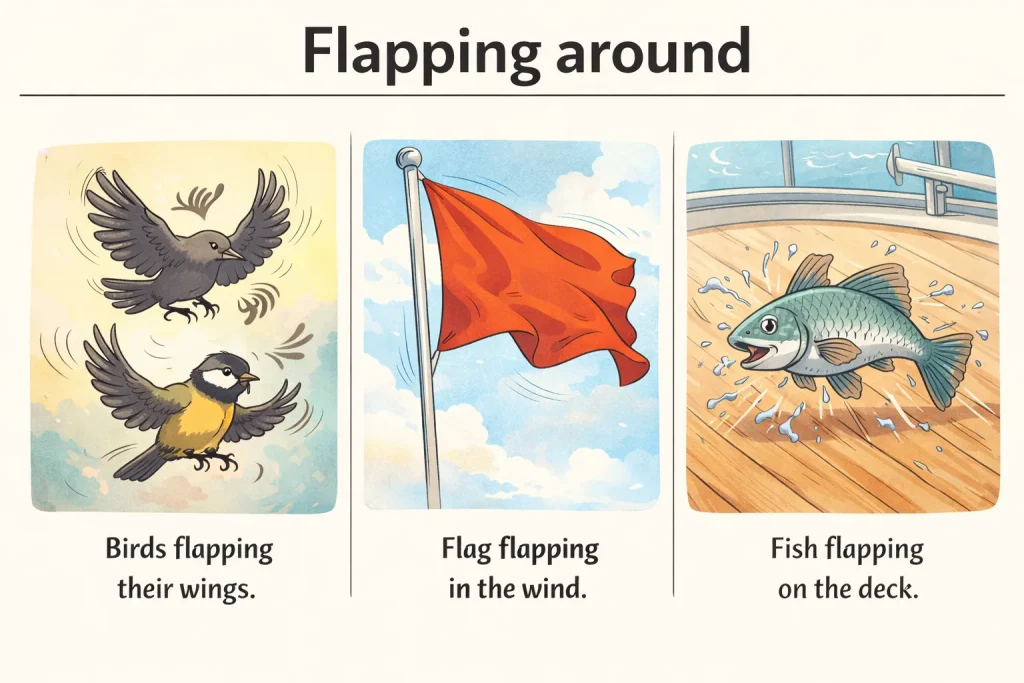
🐟 表达3: flapping around
扑腾;拍打着(翅膀/鳍)
flap 是”拍打、扑腾”,around 表示”四处”。这里形容活鲤鱼在袋子里拍打挣扎的样子。
词源与记忆:
- flap 是拟声词,模仿翅膀或鱼鳍拍打的声音
- 想象鱼离开水后用力扑腾的样子
同源词家族:
- flap (动词/名词) → flapping (拍打的) → flapper (20年代摩登女郎,因穿着飘动得名)
使用场景:
flap 可以形容翅膀、旗帜、衣服等的拍打。可以说 “birds flapping their wings”(鸟儿拍打翅膀),”flag flapping in the wind”(旗帜在风中飘动),”fish flapping on the deck”(鱼在甲板上扑腾)。
🥩 表达4: a hunk of pork rump
一大块猪臀肉
hunk 是”大块、厚块”,常用于肉类或面包。rump 是”臀部”,pork rump 就是”猪臀肉”。hunk 这个词很口语化,有”粗犷”的感觉。
词源与记忆:
- hunk 可能来自荷兰语,原意”大块”
- rump 来自古挪威语,指”臀部、后部”
同源词家族:
- hunk (名词) → hunky (健壮的,俚语)
- rump (名词) → rump steak (臀肉牛排)
使用场景:
hunk 常用于”大块食物”,如 “a hunk of bread”(一大块面包),”a hunk of cheese”(一大块奶酪)。也可以指”强壮的男人”(俚语)。rump 除了肉类,还有”残余部分”的意思,如 “rump parliament”(残余议会)。
🔪 第二幕:鸡血成冻、肠子焯水、烟熏兔配方
双语场景
English: Feng Rui rinsed the chicken’s intestines, cut them into sections with a sharp cleaver, and sprinkled them with a little salt. Then, having dispatched the carp in the bathroom, he put the whole chicken and the chunk of pork into a panful of water, and set them to boil on the stove. He continued to talk as he put the bagful of chicken blood into a panful of simmering water, where it set to a jelly, and blanched the intestines to clean them. And then he prodded his taciturn friend to give me the recipe for smoked rabbit, which involved skinning the animal alive, rubbing it in a marinade of salt and spices, flattening its body between two heavy stones, crucifying it on a cross of wooden sticks, and then smoking it over a smouldering fire of pine, camphor and cypress leaves.
中文: 冯锐清洗了鸡内脏,用锋利的菜刀切了丁,拿盐腌了起来。接着,他把鲤鱼扔进卫生间,再把鸡和猪肉放进一锅水里,放到炉子上烧开。他一边说着,一边把那袋鸡血放进一锅慢慢煨着的水中,让血凝固成果冻状。然后又洗了鸡肠。接着他戳了戳那位沉默寡言的朋友,叫他给我讲讲烟熏兔的做法:首先是要活剥兔皮,用盐和香料揉搓腌制;拿两块很重的石头压住身体两边让其躺平,晾在木棍做成的十字架上;然后用松枝、樟树和柏树叶生火,拿这个烟来熏。
💡 这一幕学什么?
⚰️ 表达5: dispatched the carp
解决了鲤鱼;杀了鲤鱼
dispatch 原意是”派遣、发送”,但也有”迅速解决、杀死”的委婉含义。作者用 dispatched 而不是 killed,带着一种黑色幽默和距离感。
词源与记忆:
- dispatch 来自意大利语,dis-(分开) + pactum(协议),原意”解除束缚”
- 引申为”派遣”,再引申为”迅速解决(通常指杀死)”
同源词家族:
- dispatch (动词/名词) → dispatcher (调度员)
- pact (协议) → compact (契约;紧凑的)
使用场景:
dispatch 作”杀死”时是委婉语或文学用法。可以说 “dispatch an enemy”(干掉敌人),”dispatch a wounded animal”(结束受伤动物的痛苦)。它比 kill 更含蓄,带有”迅速、干净利落”的意味。
🫕 表达6: a panful of simmering water
一锅慢慢煨着的水
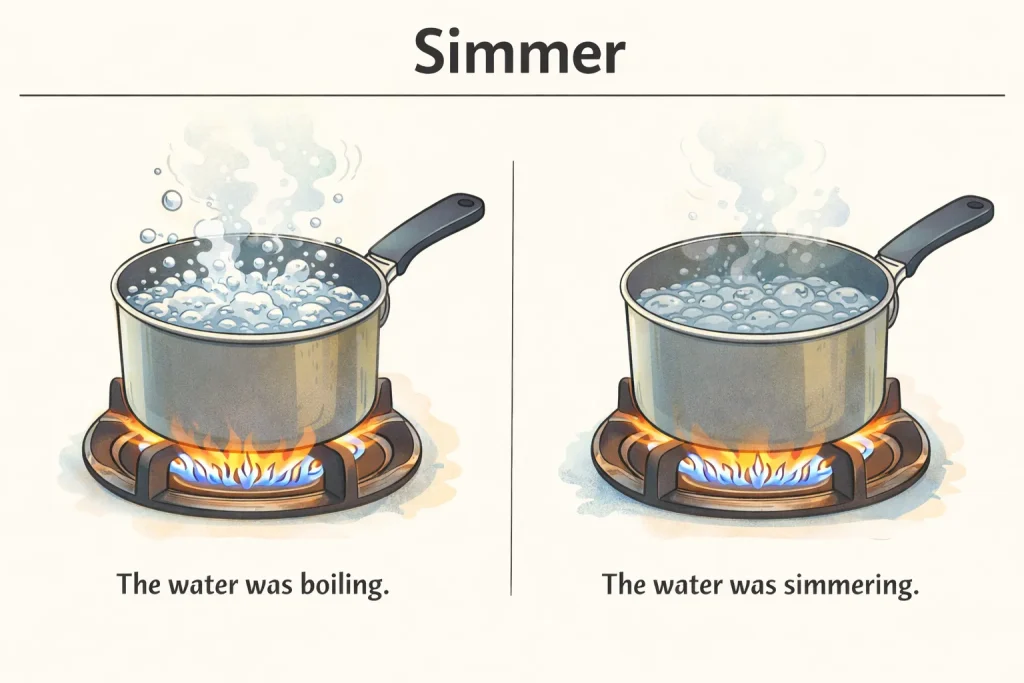
panful 是”一锅的量”,simmer 是”小火慢煮、文火煨”。simmering 强调水在低温下轻微冒泡,不是沸腾。
词源与记忆:
- simmer 可能来自古英语,模仿小火慢煮时”咝咝”的声音
- 想象锅里的水轻轻冒小泡,不是翻滚沸腾
同源词家族:
- simmer (动词/名词) → simmer down (平静下来)
- boil (沸腾,更剧烈) → poach (水煮,更温和)
对比理解:
- The water was boiling. (水在沸腾——剧烈翻滚)
- The water was simmering. (水在慢煮——轻微冒泡)
simmer 是介于 boil(沸腾)和 warm(温热)之间的状态。
使用场景:
simmer 是烹饪术语,表示”小火慢煮”。可以说 “simmer the soup for an hour”(把汤慢煮一小时),”let it simmer”(让它慢慢煨着)。比喻义是”情绪即将爆发”,如 “simmer with anger”(怒火中烧但还没爆发)。
🍮 表达7: set to a jelly
凝固成果冻状
set 这里是”凝固、定型”,jelly 是”果冻、凝胶”。鸡血在热水中凝固成类似果冻的质地。
同源词家族:
- set (动词,多义) → setting (凝固;背景)
- jelly (名词/动词) → jellified (成冻的) → gelatin (明胶)
使用场景:
“set to” 常用于描述液体凝固成某种状态。可以说 “set to a gel”(凝固成凝胶),”set to a solid”(凝固成固体)。jelly 在英式英语中也指”果酱”,但这里是”凝胶”的意思。
🔥 表达8: blanched
焯水;用沸水快速烫
blanch 是烹饪术语,指”用沸水快速烫一下,然后放入冷水”,目的是去除异味、血水或固定颜色。
词源与记忆:
- blanch 来自法语 blanc(白色),因为蔬菜焯水后会变白或保持颜色
- 也可以指”(脸色)变白”,因为害怕或震惊
同源词家族:
- blanch (动词) → blanched almonds (焯过的去皮杏仁)
- blanc (白色,法语) → blank (空白的) → blanche (法语女名,意为”白色的”)
使用场景:
blanch 在烹饪中很常用,如 “blanch vegetables”(焯蔬菜),”blanch tomatoes to peel them”(焯番茄便于去皮)。也可以形容”脸色变白”,如 “He blanched at the news”(他听到消息后脸色发白)。
🤐 表达9: taciturn
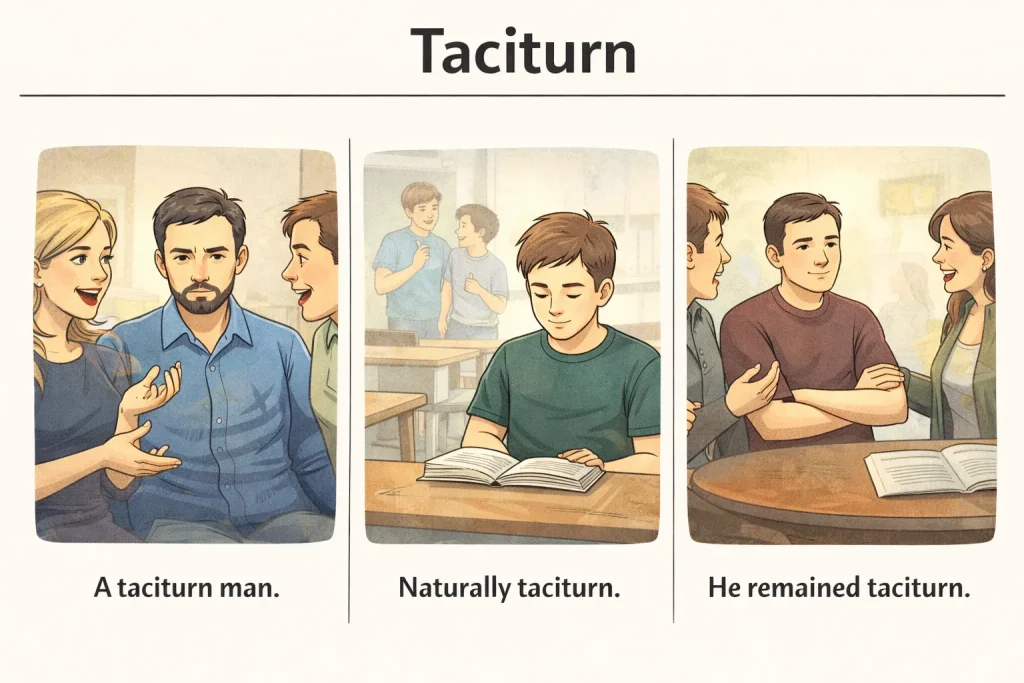
沉默寡言的;不爱说话的
taciturn /ˈtæsɪtɜːn/ 形容”习惯性地沉默、不爱说话”,比 quiet 或 silent 更正式,带有”性格内向、不善言辞”的意味。
词源与记忆:
- taciturn 来自拉丁语 tacitus(沉默的),与 tacit(心照不宣的)同源
- 想象一个总是沉默不语的人
同源词家族:
- taciturn (形容词) → taciturnity (名词,沉默寡言)
- tacit (心照不宣的) → tacitly (默许地)
使用场景:
taciturn 是个文学性很强的词,适合用在正式或文学写作中。可以说 “a taciturn man”(沉默寡言的人),”taciturn by nature”(天性不爱说话)。它比 quiet 更强调”性格特质”,而不只是暂时的安静。
🪨 表达10: flattening its body between two heavy stones
用两块重石头把身体压扁
flatten 是”使变平、压扁”,between 表示”在…之间”。这个动作描述很具体,是制作烟熏兔的关键步骤。
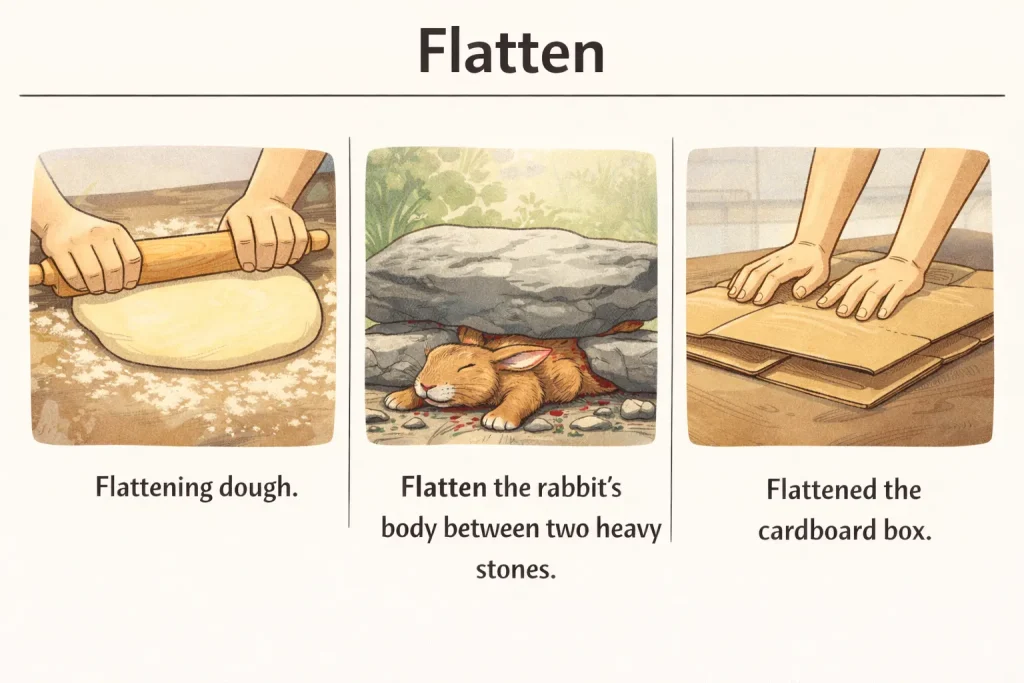
同源词家族:
- flat (平的) → flatten (动词,使变平) → flattened (被压扁的)
使用场景:
flatten 可以是物理压扁,如 “flatten dough”(把面团擀平),”flatten a cardboard box”(把纸箱压扁)。也可以比喻”摧毁”,如 “flatten a city”(夷平一座城市),”flatten the opposition”(压倒对手)。
✝️ 表达11: crucifying it on a cross
把它钉在十字架上
crucify 是”钉在十字架上”,来自古罗马的死刑方式。这里用于烹饪,指把兔子固定在木架上,带有黑色幽默。
词源与记忆:
- crucify 来自拉丁语 crux(十字架),与 crucial(关键的)同源
- 想象耶稣受难的十字架
同源词家族:
- crucify (动词) → crucifixion (钉十字架) → crucifix (十字架像)
- crux (关键点) → crucial (关键的) → excruciating (极痛苦的)
使用场景:
crucify 字面意义是”钉十字架”,如 “Jesus was crucified”(耶稣被钉十字架)。比喻义是”严厉批评”,如 “crucified by the media”(被媒体严厉批评)。作者这里用字面意义,但语境是烹饪,制造了强烈的视觉冲击。
🔥 表达12: smouldering fire
阴燃的火;闷烧的火
smoulder (美式 smolder)是”阴燃、闷烧”,指没有火焰但持续冒烟的燃烧状态。这种火适合烟熏食物。
词源与记忆:
- smoulder 来自中古英语,可能与 smother(闷住)同源
- 想象火堆被压住,只冒烟不起火焰
同源词家族:
- smoulder (动词/名词) → smouldering (阴燃的;酝酿的)
- smother (闷住、压制)
对比理解:
- The fire was blazing. (火在熊熊燃烧——有火焰)
- The fire was smouldering. (火在阴燃——只冒烟)
smouldering 比 burning 更强调”缓慢、无焰”的燃烧。
使用场景:
smoulder 可以是字面的”阴燃”,如 “smouldering embers”(阴燃的余烬),”smouldering ruins”(冒烟的废墟)。也可以比喻”酝酿的情绪”,如 “smouldering resentment”(郁积的怨恨),”smouldering look”(热辣的眼神)。
📝 表达13: took notes assiduously
勤奋地做笔记
assiduously /əˈsɪdʒuəsli/ 是”勤奋地、孜孜不倦地”,比 carefully 或 diligently 更正式,强调”持续、专注”的努力。
词源与记忆:
- assiduously 来自拉丁语 assiduus,ad-(朝向) + sedere(坐),字面意思是”一直坐在那里”
- 想象一个学生专心致志地坐着记笔记
同源词家族:
- assiduous (形容词) → assiduously (副词) → assiduity (名词,勤奋)
- sedere(坐) → sedentary (久坐的) → sedate (镇静的) → sediment (沉积物)
使用场景:
assiduously 适合正式或文学写作,形容”认真、持续的努力”。可以说 “work assiduously”(勤奋工作),”study assiduously”(刻苦学习),”avoid assiduously”(刻意回避)。它比 carefully 更有”长期坚持”的意味。
✍️ 文学风格锦囊:如何写出“烟火气”与“高级感”?
这份素材之所以高级,是因为它在描写接地气的场景时,选用了正式且具视觉冲击力的词汇:
- 拟人与委婉 (Euphemism): 用 dispatch(处置)代替 kill,用 inner accoutrement(内部装备)代替 guts。这能让文字显得冷静且专业,仿佛在描述一场外科手术。
- 宗教与历史隐喻 (Metaphor): crucify(钉十字架)本是宗教色彩极重的词,用在处理食材上,瞬间让这道菜有了一种“祭典”般的仪式感。
- 动态的层次感: 从 amble(悠闲地走)到 flap(剧烈扑腾),再到 simmer(文火慢煨),动词的节奏感构成了极佳的叙事流。
📊 重点词汇对比记忆表
| 场景 | 普通表达 (Basic) | 地道/文学表达 (Evocative) | 原型例句 (Example Sentence) |
|---|---|---|---|
| 走路 | Walk back | Amble back | It’s nice to amble back home after a heavy dinner. |
| 内脏 | Organs / Guts | Inner accoutrement | The chef prepared the chicken and its inner accoutrement. |
| 杀(鱼) | Kill | Dispatch | A skilled butcher can dispatch the animal quickly and humanely. |
| 火候 | Boil water | Simmer | Turn down the heat and let the soup simmer for an hour. |
| 性格 | Be quiet | Taciturn | He is a taciturn man who rarely speaks about his feelings. |
| 勤奋 | Diligent | Assiduous | She is assiduous in her efforts to master every cooking detail. |
💡 核心表达原型清单
这里是文中最具画面感的动作与状态,全部还原为初始形态:
- Amble
v.:漫步。例:We amble through the market to enjoy the atmosphere. - Inner accoutrement
n.:内部装备(幽默指内脏)。例:Check the inner accoutrement of the machine. - Flap
v.:扑腾。例:The fish flap wildly when they are taken out of the water. - A hunk of
phrase:一大块。例:He cut a hunk of cheese for the sandwich. - Dispatch
v.:解决/杀死。例:He needs to dispatch the tasks on his list before cooking. - Simmer
v.:煨。例:Keep the water at a simmer, not a rolling boil. - Set to a jelly
phrase:凝固成果冻状。例:The bone broth will set to a jelly overnight. - Blanch
v.:焯水。例:You should blanch the spinach to keep its bright green color. - Taciturn
adj.:沉默寡言的。例:The taciturn driver didn’t say a word during the trip. - Flatten
v.:压扁。例:Use a heavy pan to flatten the garlic cloves. - Crucify
v.:钉在十字架上。例:The author decided to crucify the character in the final chapter. - Smoulder
v.:阴燃。例:The logs continue to smoulder long after the flames are gone. - Assiduous
adj.:勤奋的。例:His assiduous practice led to his eventual success.
💡 进阶小贴士:
如果你想在英语表达中显得更有深度,Assiduous(形容词)和 Assiduously(副词)是极佳的选择。
- 日常说法: I study hard.
- 高级写法: I am assiduous in my English studies. (或者 I study English assiduously.)