地道表达阅读约 10 分钟
热浪英语怎么说?blistering、sweltering 等12个外刊表达精读
一天一点点,进步看得见。
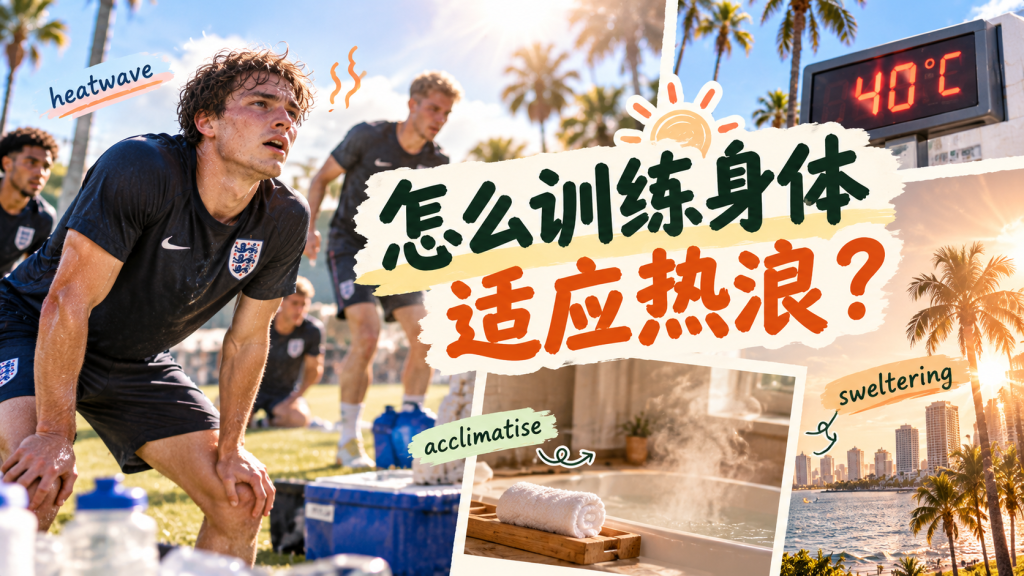
今日新闻背景:怎么训练身体适应热浪?
2026年7月,西欧迎来当年第三次热浪。连英格兰足球队都提前飞去佛罗里达”热训”——毕竟英国的温和气候让球员们根本没见过真正的热。科学家说,普通人也能做到:泡热水澡就够了。
来,从这篇文章里学几个词👇
blistering 炙热难耐
England’s football team set up camp in West Palm Beach, Florida, on June 1st, almost two weeks before the start of the 2026 World Cup. That was so the players, many of whom were used to training in the mild climate of Britain, could adapt to the blistering heat of the host nations.
英格兰足球队于6月1日在佛罗里达州西棕榈滩安营扎寨,距2026年世界杯开幕还有近两周。这是为了让那些习惯了英国温和气候的球员,能够适应东道国的酷热天气。
blister 本来是皮肤上的水泡——晒伤、烫伤后起的那种。blistering 就是”热到让人起水泡”的程度,用来形容太阳、高温、速度、批评……总之就是猛烈到难以承受的那种感觉。
- blistering heat 炙热难耐的高温
- blistering pace 令人窒息的速度(比赛场景常见)
- blistering criticism 措辞激烈的批评
下次不想说 “very hot”,可以试试:
The players struggled through blistering afternoon sessions, temperatures well above 35°C.
球员们在午后炙热难耐的训练中苦苦坚持,气温远超35摄氏度。
sweltering 闷热难耐
The best way to bring about such changes is “controlled hyperthermia”. Unfortunately, that involves being locked in a heat chamber for 90 minutes and monitored with a rectal thermometer. In the sweltering heat, participants spend 30 minutes exercising to raise their core body temperatures to a target value—usually 38.5°C.
带来这些变化的最佳方式是”可控高热疗法”。不幸的是,这需要被关在热室里90分钟,并用直肠温度计进行监测。在闷热难耐的高温中,参与者花30分钟运动,将核心体温升至目标值——通常是38.5摄氏度。
swelter 本来是”热得难受、快要透不过气”。sweltering 强调空气又热又闷,身体像被热气包住,常用于天气、房间和通勤场景。
- sweltering heat 闷热难耐的高温
- a sweltering summer afternoon 闷热的夏日下午
- a sweltering commute 闷热难熬的通勤
下次不想只说 “very hot and humid”,可以试试:
The train was packed, and the sweltering carriage made the evening commute feel endless.
车厢里挤满了人,闷热的空气让晚高峰通勤显得格外漫长。
acclimatise 适应环境
The simplest is to exercise outside in the heat, says Neil Maxwell, an environmental physiologist at the University of Brighton, in Britain. “That will naturally acclimatise you.”
英国布莱顿大学的环境生理学家尼尔·麦克斯韦尔说,最简单的方法是在炎热中进行户外锻炼。”这会让你的身体自然地适应环境。”
acclimatise 不是普通的”习惯了”,而是身体慢慢适应新的气候或环境——排汗、心率和血液循环都会随之调整。adapt 的范围更广,acclimatise 更强调生理上的适应。
- acclimatise to the heat 适应高温
- acclimatise to high altitude 适应高海拔
- give your body time to acclimatise 给身体时间适应
下次不想只说 “get used to the heat”,可以试试:
Give yourself a few days to acclimatise before attempting any strenuous exercise.
在进行剧烈运动之前,先给自己几天时间适应环境。
leisurely 从容不迫
Preparing for heat requires exposure to heat. That increases levels of blood plasma—the watery stuff which carries blood cells around the body—meaning the heart does not have to work as hard to pump blood, and can beat in a more leisurely manner for longer.
适应高温需要接触热环境。这会增加血浆水平,让心脏不必那么费力地泵血,从而能够以更从容平缓的方式跳动更长时间。
leisure 是”闲暇”,leisurely 就是不慌不忙、按照轻松节奏进行。它强调一种有余裕的慢,而不是效率低或动作迟缓。
- a leisurely walk 悠闲的散步
- a leisurely breakfast 慢悠悠享用的早餐
- at a leisurely pace 以从容的节奏
下次不想只说 “slow and relaxed”,可以试试:
On weekends, she likes to take a leisurely stroll through the market.
周末,她喜欢悠闲地在市场里慢慢逛。
take the edge off 缓解一下
When done safely, however, some simple tactics could help take the edge off the weather. Jumping in a hot bath may not be appealing as temperatures begin to rise. But your future self will thank you for it.
不过,只要操作安全,一些简单的方法确实可以帮助减轻天气带来的不适。气温升高时,泡热水澡听起来可能并不诱人,但未来的你会感谢现在的自己。
edge 是刀刃。take the edge off 就像把锋利的边缘磨钝一点——不是彻底消除问题,而是让疼痛、寒冷或压力没有那么难熬。
- take the edge off the cold 稍微驱驱寒
- take the edge off the pain 缓解一些疼痛
- take the edge off stress 减轻一点压力
下次不想只说 “make it feel better”,可以试试:
A coffee and a chat with a friend took the edge off the afternoon slump.
一杯咖啡加上和朋友聊聊天,让下午的低迷感减轻了不少。
whence 由此;从那里
More plasma also improves blood flow to the skin. There, tiny sweat glands release water and electrolytes onto the skin’s surface, whence the water evaporates, cooling the body.
更多的血浆还能改善皮肤的血液流动。微小的汗腺把水分和电解质释放到皮肤表面,水分由此蒸发,从而帮助身体降温。
whence 相当于 from where 或 from which,表示”从那里、由此”。它带有正式或文学色彩,现代口语里很少主动使用,但在正式文章中读到时要能认出来。
- whence the water evaporates 水分由此蒸发
- return whence you came 回到你来的地方
- the place whence it came 它来自的地方
下次在正式文本里看到 whence,可以这样理解:
The vapour rises to the surface, whence it escapes into the air.
蒸气上升到表面,并由此逸散到空气中。
go a long way 大有帮助
A nice, hot bath can go a long way.
舒舒服服泡个热水澡,就能起到很大作用。
go a long way 不是“走很远”,而是某个看似简单的做法能够带来很大帮助或产生明显效果。它常用来强调:不需要做很多,一点改变就可能很有用。
- go a long way towards solving the problem 对解决问题很有帮助
- a little patience goes a long way 一点耐心就能发挥很大作用
- small changes can go a long way 小改变也能带来大效果
下次不想只说 “be very helpful”,可以试试:
A few thoughtful details can go a long way towards making guests feel welcome.
几个贴心的小细节,就能让客人感受到满满的欢迎。
beat the heat 消暑;应对酷热
But as July has brought western Europe’s third heatwave of 2026, even those not competing in elite sports might wonder how they can train appropriately to beat the heat.
随着7月给西欧带来2026年的第三次热浪,即使不是职业运动员,人们也会想知道该如何适当训练,才能应对酷热。
beat 是“击败”。beat the heat 就是想办法战胜高温,让自己凉快下来,常用于天气新闻、旅行建议和夏季生活方式内容。
- ways to beat the heat 消暑的方法
- stay indoors to beat the heat 待在室内避暑
- a refreshing drink to beat the heat 解暑饮品
下次不想只说 “stay cool”,可以试试:
On hot afternoons, locals head to the river to beat the heat.
炎热的午后,当地人会去河边消暑。
bring about 促成;引起
The best way to bring about such changes is “controlled hyperthermia”.
促使身体发生这些变化的最佳方式,是“可控高热疗法”。
bring about 强调“使某种变化或结果发生”,比 cause 更有过程感,常用于正式写作中的政策、社会变化、改善和后果。
- bring about change 带来改变
- bring about improvements 促成改善
- bring about a rise in temperature 导致温度升高
下次不想只说 “cause a change”,可以试试:
The new policy brought about a sharp rise in applications.
新政策使申请数量大幅上升。
do the trick 奏效;管用
In fact, as work published in April in Healthcare found, hot baths alone can do the trick.
事实上,4月发表于《Healthcare》的一项研究发现,单靠泡热水澡就能达到效果。
do the trick 表示某个简单方法已经足以解决问题、满足需要或达到预期效果。它比 work 更口语,也带有“原来这样就够了”的轻松感。
- that should do the trick 这样应该就管用了
- a quick restart may do the trick 快速重启一下可能就能解决
- sometimes a simple apology does the trick 有时简单道歉就能解决问题
下次不想只说 “it works”,可以试试:
If the app freezes, a quick restart usually does the trick.
如果应用卡住了,快速重启通常就能解决。
in the lead-up to 在……前夕
Still, only a few days of training are needed in the lead-up to a heatwave.
不过,在热浪来临前的准备阶段,只需要训练几天就够了。
the lead-up 是某件大事发生前逐步推进的准备期。in the lead-up to 不只是 before,还包含“临近事件、正在准备”的感觉,是新闻报道里的高频结构。
- in the lead-up to the election 在大选前夕
- in the lead-up to the World Cup 在世界杯开赛前
- in the lead-up to the holiday season 在假日季来临前
下次不想只说 “before the exam”,可以试试:
She cut back on late nights in the lead-up to the exam.
临近考试的那段时间,她减少了熬夜。
no need to sweat it 不用担心;不用费力
So there is, as it were, no need to sweat it.
所以,可以说,根本不用为此费力出汗。
sweat it 在口语里表示“为某事担心或费神”。这里讲的正是高温训练,作者却说 no need to sweat it,同时利用了 sweat 的字面义“出汗”,形成了一个很巧的双关。as it were 相当于“可以说、打个比方说”,用来提示后面是在玩文字。
- don’t sweat it 别担心;没关系
- there’s no need to sweat it 不必为此费神
- as it were 可以说;打个比方说
下次想轻松地安慰别人,可以试试:
The instructions look complicated, but there’s no need to sweat it.
说明看起来有点复杂,但不用担心。
顺手记两个高频小词
- build up 逐渐形成;累积
75–80% of adaptations build up in the first four to seven days.- still apply 仍然适用;依然存在
The usual risks from heat still apply.
今日词单|14 个热浪新闻英语表达
| 英语表达 | 中文释义 |
|---|---|
| blistering | 炙热难耐 |
| sweltering | 闷热难耐 |
| acclimatise | 适应环境 |
| leisurely | 从容不迫 |
| take the edge off | 缓解一下 |
| whence | 由此;从那里 |
| go a long way | 大有帮助 |
| beat the heat | 消暑;应对酷热 |
| bring about | 促成;引起 |
| do the trick | 奏效;管用 |
| in the lead-up to | 在……前夕 |
| no need to sweat it | 不用担心;不用费力 |
| build up | 逐渐形成;累积 |
| still apply | 仍然适用;依然存在 |